

Cyber threats are growing more sophisticated, and the challenges businesses face today are unlike anything we’ve seen before. Attack surfaces continue to expand, threat actors have advanced tools at their disposal, and the stakes keep rising. Cybercrime is projected to cost businesses $10.8 trillion globally this year,1 so your organization’s ability to stay ahead of emerging threats is more critical than ever.
At Netlink Voice, we help businesses strengthen their security posture with solutions that adapt to the modern threat landscape. Read on to explore the top cybersecurity threats and trends in 2026 and what you can do to keep your business safe.
What Is the Current Cybersecurity Threat Landscape?
The cybersecurity threat landscape in 2026 is dominated by automation, AI-powered attacks, and vulnerabilities introduced by remote work and connected devices. Threat actors are using everything from deepfakes to ransomware as a service (RaaS) to compromise networks.
A few key characteristics of today’s threat landscape include:
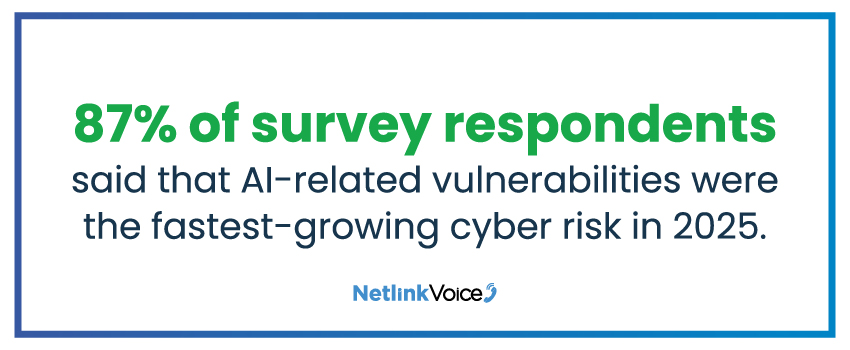
- AI-Powered Attacks: Threat actors are leveraging AI to speed up reconnaissance, phishing, and exploit development – and business leaders are worried. 87% of respondents to the World Economic Forum’s Global Cybersecurity Outlook 2026 survey said that AI-related vulnerabilities were the fastest-growing cyber risk over the past year.2
- Supply Chain Vulnerabilities: Vendors and third-party providers continue to be a weak link for many businesses, with 78% of CEOs of highly resilient organizations identifying supply chain dependencies as the biggest challenge to strengthening resilience.2
- Expanded Attack Surface: Cloud services, IoT, mobile endpoints, and hybrid work environments increase exposure. Add to this the popularity of AI tools, which are creating new vulnerabilities that traditional controls simply weren’t designed to address.
Businesses must prepare for a variety of cybersecurity challenges – and it starts with knowing what’s out there.
Top Cybersecurity Threats to Watch in 2026
Let’s look at the most common cyber threats targeting businesses this year.
Phishing & Social Engineering Attacks
Human error remains one of the most common cyber attacks. Phishing emails and vishing (voice phishing) calls are increasingly convincing, often using real customer or vendor data to gain trust.
Some examples of social engineering attacks include:
- CEO impersonation requests for wire transfers
- Fake multi-factor authentication (MFA) reset prompts
- Links to malware-laden websites disguised as vendors
These aren’t generic phishing campaigns anymore. They’re personalized, AI-crafted, and getting much more difficult to tell apart from legitimate messages.
Ransomware-as-a-Service (RaaS)
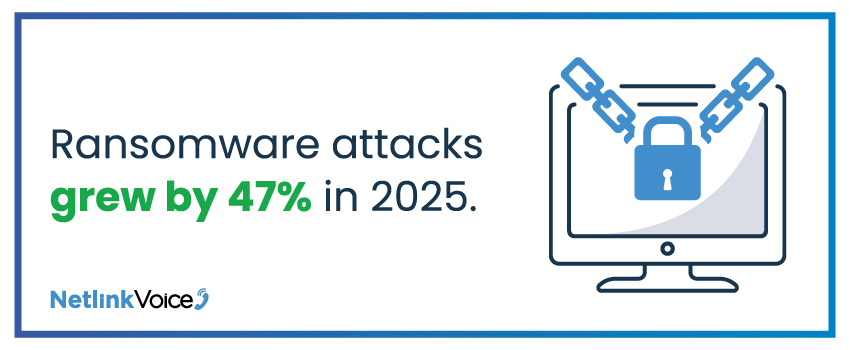
Ransomware is no longer just a high-level hacker activity – it’s now a business model. RaaS platforms let even non-technical attackers deploy ransomware for a cut of the profits. This trend is expanding the reach and frequency of ransomware attacks, with publicly reported attacks increasing by 47% in 2025.3
During a RaaS attack, bad actors encrypt your files, halt operations, and demand payment. Even if you recover your data, the reputational damage from exposed customer information can last for years and directly impact your bottom line.
Insider Threats
Employees, whether intentionally malicious or accidentally negligent, continue to pose risks to your organization. Insider threats are particularly dangerous because the person already has legitimate access to systems and data.
Common causes of insider threats include data sharing, where employees accidentally expose sensitive information – especially common lately with the rise in shadow AI. Unsecured devices can also allow attackers to access company data through personal or poorly managed equipment.
Traditional firewalls can’t stop them because they’re already inside. That’s why Zero Trust security, which verifies every access request regardless of who’s making it, is critical. Your employees need access, but they shouldn’t have access to everything.
Zero-Day Exploits
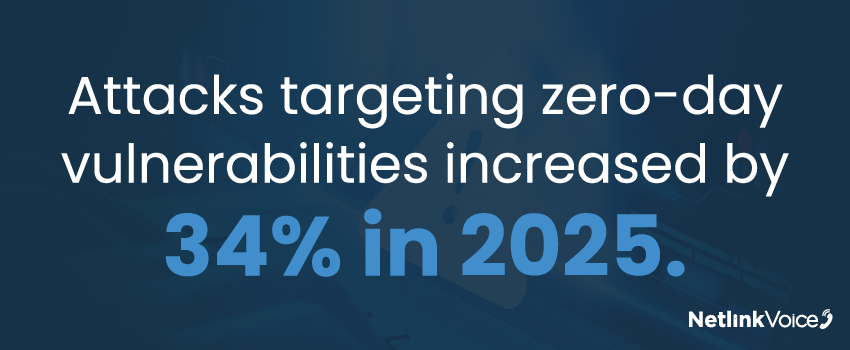
Zero-day vulnerabilities – security flaws unknown to software vendors – are being exploited faster than ever before, with Verizon’s 2025 Data Breach Investigations Report revealing a 34% increase in attackers exploiting these vulnerabilities.4 And because AI tools are accelerating discovery and exploitation, businesses must reduce detection and response times.
3 Cybersecurity Trends Shaping 2026
Modern threats demand modern solutions. Here are the top cybersecurity trends businesses should be paying attention to.
1. Cybersecurity Technologies Driven by AI
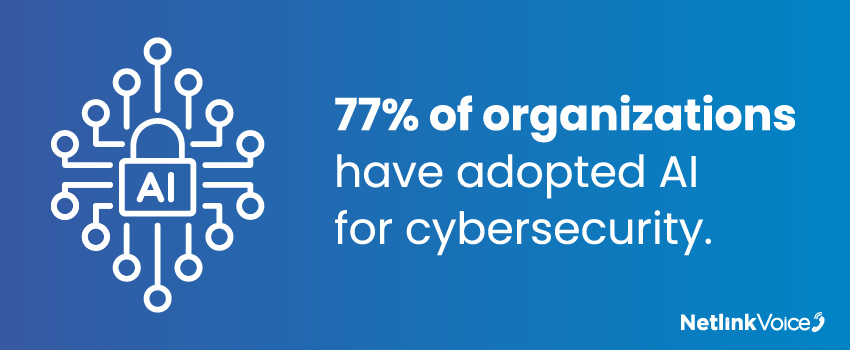
While AI is introducing new vulnerabilities in IT systems, it’s also transforming security operations. 77% of organizations have adopted AI for cybersecurity,2 particularly for:
- Phishing detection (52%)
- Intrusion and anomaly response (46%)
- User-behaviour analytics (40%)
At Netlink Voice, we integrate AI-powered cybersecurity tools into our business solutions to help detect and block threats before they cause harm. We focus on solutions that augment human expertise rather than replace it, giving your team better visibility and faster response capabilities.
2. Zero Trust Architecture Adoption
Traditional perimeter-based security doesn’t cut it anymore, which is why more business leaders are turning to Zero Trust. Instead of trusting users or devices because they’re on your network, Zero Trust continuously verifies access requests based on context, role, and behavior.
Even if an attacker steals an employee’s credentials, they can only access what that specific employee needs for their job, not your entire database. If malware infects an endpoint and tries to move through your network, Zero Trust stops it at each step. The result is a dramatic reduction in the blast radius when compromises occur.
3. Cybersecurity Compliance as a Business Driver
Compliance requirements are becoming stricter – and more businesses are prioritizing cybersecurity to avoid penalties and protect customer trust.
Compliance requirements force the implementation of best practices that might otherwise be overlooked. They provide auditing and accountability mechanisms that help track security maturity and encourage proactive risk assessment rather than reactive incident response.
How To Prepare for Cybersecurity Challenges in 2026
Understanding the threat landscape is one thing, but responding to it is another. Here’s how your business can stay ahead of evolving cybersecurity challenges:
- Conduct Regular Risk Assessments: Start by identifying your most critical assets and data. What would happen if attackers encrypted these systems or stole this information? What would be the business impact? Your risk assessment should evaluate potential attack vectors and vulnerabilities specific to your industry and organization size. Prioritize mitigation efforts based on both the likelihood of an attack and the potential impact if it succeeds.
- Train Employees on Security Awareness: Your teams are your strongest defense against phishing and social engineering attacks. Simulate phishing attacks regularly so your team gets practice recognizing and reporting suspicious emails. Practical training on safe practices like password management, secure file handling, and how to report suspicious activity is also essential.
- Strengthen Endpoint Security: Endpoints are often the first entry point for attackers. Use endpoint detection and response (EDR) tools that monitor for suspicious behavior, and enforce device encryption so that stolen devices cannot be easily compromised. You can also implement remote wipe capabilities so you can erase data from lost devices.
- Deploy Multi-Layered Defense: Layered security integrates firewalls, antivirus, intrusion detection systems (IDS), and cloud security to prevent threats from slipping through a single weak point. Even if one layer is breached, other layers continue protecting your systems.
Not sure where to start? At Netlink Voice, we help businesses implement technology solutions – from VoIP to managed networking – with security in mind. We partner with vendors that support encryption, access controls, and monitoring features to help you stay protected by default.
Get Ahead of Cybersecurity Threats With Netlink Voice
2026 is already shaping up to be a year of complex cybersecurity threats, advanced attack tactics, and new technologies. The stakes are high – but with the right tech partner, your business can stay ahead of the curve.
Netlink Voice provides secure-by-design voice, networking, and managed services that help you minimize risk and maximize uptime. Whether you’re looking to implement new defenses or stay compliant with evolving regulations, we’re here to help. Contact us today to get started.
Sources: